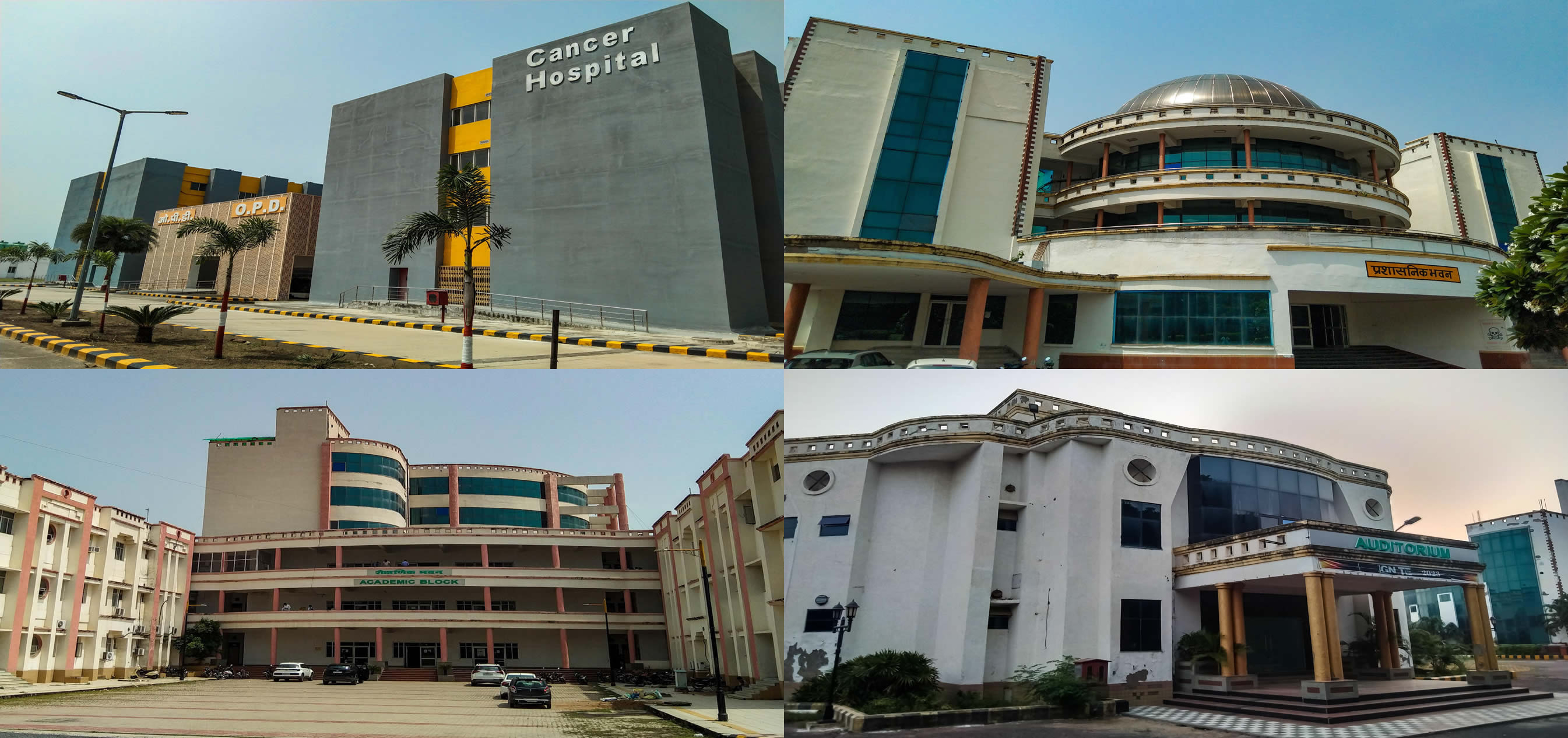
1.Introduction to the College of Nursing
The College of Nursing, Dr. Bhimrao Ramji Ambedkar Medical College, Kannauj, established in 2021 with the intake of B.Sc. nursing 40 seats, is committed to shaping competent, compassionate, and professionally skilled nursing professionals. The college is affiliated to Atal Bihari Vajpayee Medical University, Lucknow, and recognized by the Indian Nursing Council (INC), New Delhi, as well as the Uttar Pradesh State Nursing Council (UPNC), Lucknow.
As part of a reputed Nursing institution, the college provides a strong academic foundation, state-of-the-art laboratories, experienced faculty, and extensive clinical exposure in a dedicated healthcare environment. Our curriculum emphasizes evidence-based practice, hands-on learning, and holistic development, ensuring that students evolve into confident and capable caregivers.
With the growing demand for qualified nurses in Uttar Pradesh, India, and across the world, the college was established with the purpose of contributing to the healthcare workforce by producing skilled nursing professionals who meet global standards. Our mission is to prepare nurses who can deliver high-quality care, demonstrate leadership, and excel in diverse healthcare settings.
The College of Nursing continues to build a legacy of excellence, dedication, and service—empowering students to become the future pillars of the nursing profession.
2. Faculty Details
S.No. |
Name |
Designation |
1 |
Dr. Devi C.G. |
Professor cum Principal |
2 |
Dr. C. P. Lodha |
Professor cum Vice Principal |
3 |
Mr Anshul Mangal |
Associate Professor |
4 |
Mrs Shalini Vishnoi |
Assistant Professor |
5 |
Mr Goarav Swami |
Nursing Tutor |
6 |
Mr Vishvas Yogi |
Nursing Tutor |
7 |
Mrs Nanadani |
Nursing Tutor |
8 |
Ms Simran Singh |
Nursing Tutor |
9 |
Ms Rachita Kushwaha |
Nursing Tutor |
3. Infrastructure: -
A. Teaching Block
The teaching block of the nursing college is designed to provide a comprehensive, skill-oriented, and learner-centered environment that supports both theoretical and practical learning. It houses specialized laboratories and facilities that reflect real clinical settings, enabling students to develop competence and confidence before entering actual healthcare environments.
1. Nursing Foundation Laboratory
This lab serves as the base for developing essential nursing skills. Equipped with mannequins, hospital beds, procedural models, and simulation tools, it allows students to practice basic and advanced nursing procedures, patient care techniques, and emergency responses in a controlled and safe environment.
2. Community Health Nursing & Nutrition Lab
The CHN & Nutrition Lab is structured to prepare students for community-based healthcare delivery. It includes models, charts, home-visit kits, and equipment used in primary health care settings. The nutrition section supports teaching related to meal planning, dietary assessment, and therapeutic nutrition, with facilities for demonstration of food preparation and nutritional counseling.
3. Obstetrics and Gynaecology Nursing Lab
This lab provides hands-on training in maternal and women’s health care. It includes childbirth simulators, pelvis models, fetal manikins, and instruments for antenatal, intranatal, and postnatal care. Students practice procedures such as abdominal examination, labor management, newborn assessment, and family planning techniques.
4. Child Health Nursing Lab
Designed to mimic pediatric care environments, this lab includes infant and child mannequins, growth and development charts, pediatric procedure models, and emergency kits. It enables students to practice newborn care, pediatric assessment, immunization techniques, and common pediatric nursing procedures.
5. Pre-Clinical Science Lab
The Pre-Clinical Lab supports foundational sciences such as anatomy, physiology, microbiology, and biochemistry. Equipped with anatomical models, charts, microscopes, slides, and specimen samples, it enhances understanding of basic scientific concepts and helps students relate theory to clinical practice.
6. Computer Lab
The computer lab provides digital learning opportunities with internet connectivity, educational software, online learning platforms, and research tools. It supports computer literacy, e-learning, data analysis, research work, and access to digital libraries, ensuring students stay updated with modern healthcare technologies.
7. Classrooms
Spacious and well-ventilated classrooms with comfortable seating, computers, LCD projectors, and audio-visual aids enhance interactive learning. Each classroom is designed to support lecture-based and student-centered teaching methodologies.
8. Library
The college library is a dedicated learning resource center with an extensive collection of textbooks, reference books, journals, e-resources, and periodicals related to nursing and allied health sciences. Reading rooms, digital access facilities, and research support systems make it a conducive space for academic growth.
9. Clinical Training Facilities
The college have 500 bedded well-equipped parent hospitals to provide students with hands-on clinical training. Students rotate through various departments such as Medical-Surgical wards, Ortho, Maternity ward, ICU, NICU, PICU, Labour Room, Operation Theatre and Affiliated Community Health Centres, Primary Health Centres and Mental Health Center. These experiences strengthen clinical competence and professional readiness.
B. Hostel Block (Both Girls And boys)
Safe and comfortable hostel accommodations are provided for students. Facilities include furnished rooms, study areas, recreation rooms, dining halls, CCTV surveillance, and 24/7 security. The hostel environment promotes discipline, social interaction, and academic focus.
4. Spectrum of activity
- May 12,2025: International Nurses Day
- May 17, 2025: World Hypertension Day
- May 31,2025 : World No Tobacco Day
- June 14,2025: World Blood Donor Day
- June 19,2025: World Sickle Cell Anemia Day
- July 28,2025: World Hepatitis Day
- August 1-7,2025: World Breastfeeding Week
- August 21,2025: World Alzheimer's Day
- September 1-7,2025: National Nutrition Week (India)
- September 10,2025: World Suicide Prevention Day
- September 29,2025: World Heart Day
- October 10,2025: World Mental Health Day, World Sight Day
- October 1-31,2025: Breast Cancer Awareness Mont
- November 13,2025: Fresher’s welcome party
- November 14,2025: World Diabetes Day
5. Event (Upcoming/Ongoing)
- January 29: World Leprosy Day
- February 4: World Cancer Day
- February 10: International Epilepsy Day
- March 4: World Obesity Day
- March 24: World Tuberculosis Day
- March 31: Colorectal Cancer Awareness Month
- April 2: World Autism Awareness Day
- April 7: World Health Day (Focus: Maternal & Newborn Health)